




Difference Between Veneer and Plywood
In the world of woodworking and interior design, the choice of materials can significantly impact the outcome of your project. Two commonly used materials that often enter the spotlight are veneer and plywood. These versatile wood-based products serve distinct purposes and possess unique characteristics, making them essential in various applications.
In this article, we'll dive deep into the realm of veneer and plywood, exploring their differences, applications, and the factors to consider when deciding which one suits your project best. Join us on this insightful journey through the world of woodworking materials, with Bhutan Tuff, one of the best veneer brands in India, as your trusted guide
What is Veneer?
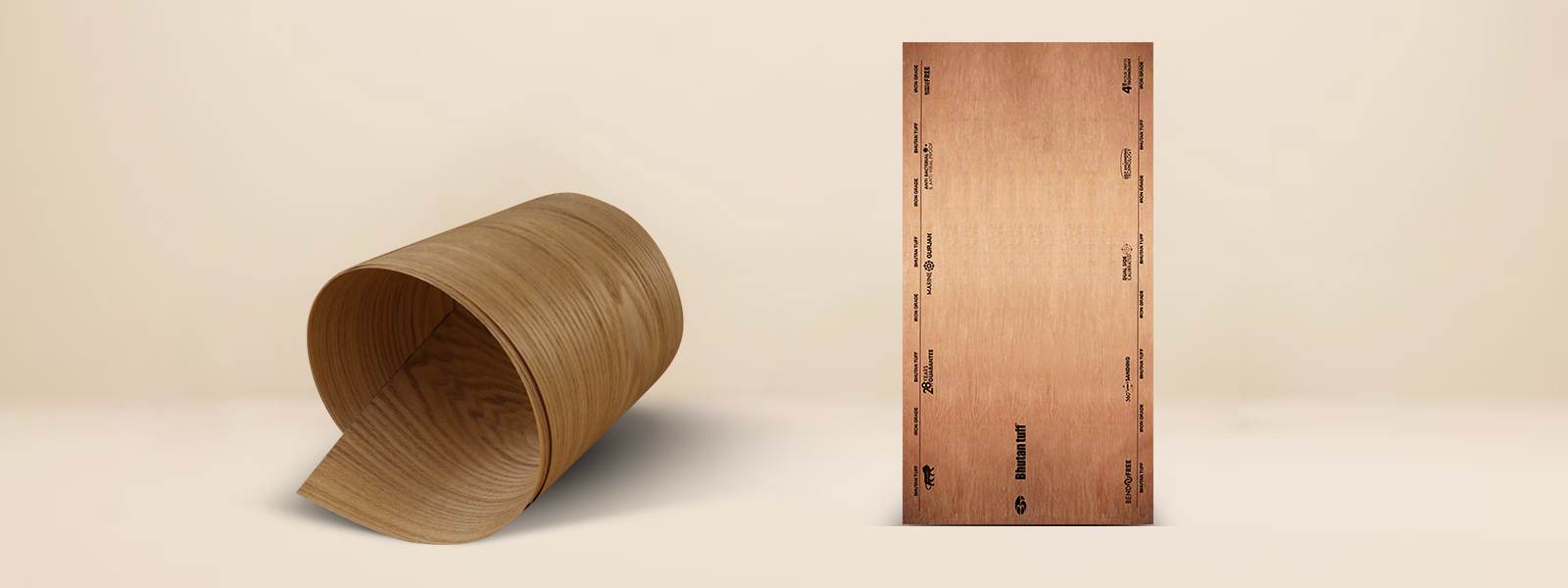
A veneer is a thin veneer of wood that has been cut or peeled from a log and is generally less than 3 mm thick. Precision-crafted veneer frequently reveals the core wood block layers, displaying beautiful textures and patterns. Veneer Plywood is a well-liked option for enhancing the visual value of furniture, cabinets, and other wood-based goods because of its beautiful attributes.
Furthermore, plywood or medium-density fiberboard (MDF) can be made by laminating several layers of veneer together. To increase the resilience of veneers to moisture, fire, and dust, chemical solutions can be used to stain, dye, or treat them.
What is Plywood?
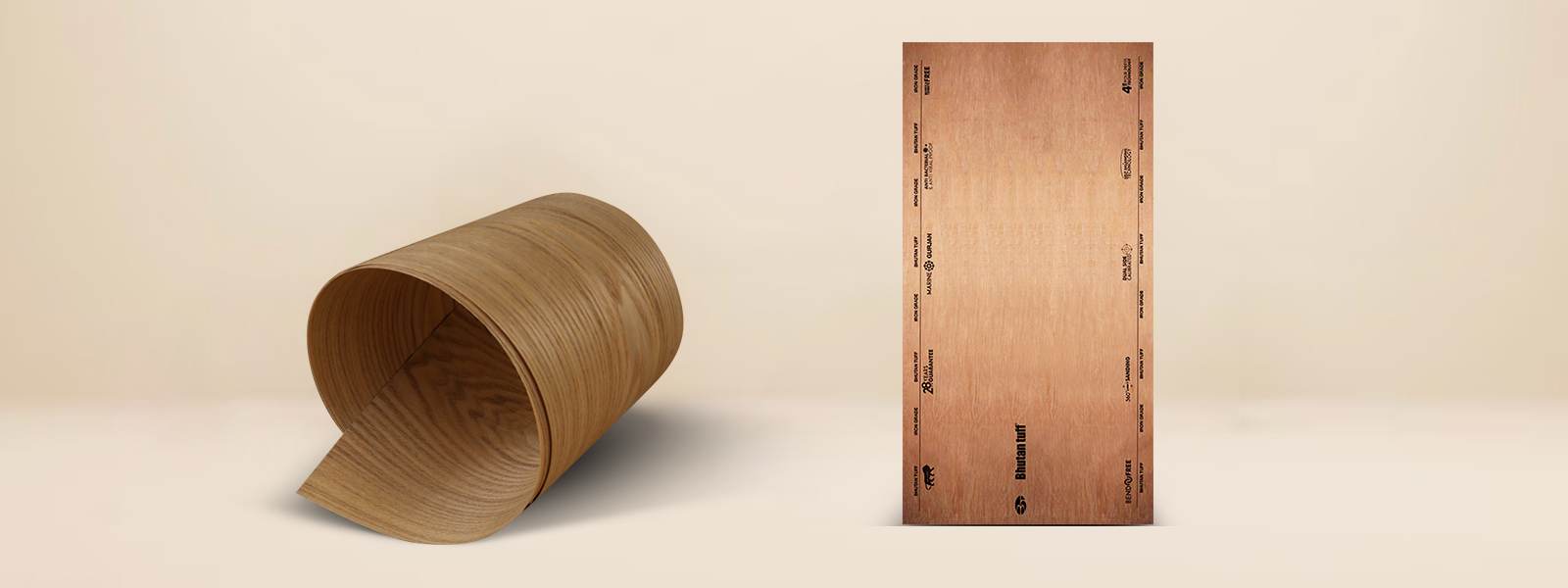
Plywood is a form of engineered wood made by gluing numerous thin layers of wood veneers together. The layers are glued together such that the grains of each layer are at a straight angle to one another. The strength, resilience, and resistance to warping and cracking of plywood are improved by this distinctive cross-graining process. Additionally, it gives the panel a constant amount of strength throughout both of its dimensions.
Plywood is renowned for its remarkable adaptability and is frequently used in building, creating furniture, and packing. In comparison to conventional solid wood, it offers a number of benefits, including flexibility, workability, reusability, and the ability to withstand cracking, shrinking, splitting, and warping.
Comparing Strength and Durability
When it comes to strength and durability, plywood holds the upper hand. The superior internal strength of plywood outperforms that of the currently available veneers. The durability and dimensional stability of goods made of plywood are guaranteed by the strength of the material. Because of its exceptional resilience to wear and tear, it is the preferred material for both residential and commercial construction.
Termite and Borer Resistance:
Veneer is naturally more vulnerable to termite and borer attacks than thicker wood products like plywood since it is made of a thin layer of wood. However, Some veneers are chemically treated to stave off these wood-eating pests, although their resistance is often weaker.
On the other hand, plywood, particularly MR-grade plywood, is widely recognized for its resistance to termites and borer infestations. Chemical treatments applied to plywood by manufacturers successfully ward off these pests. Products made from plywood are protected and preserved even in moist and humid environments because of this resistance.
Water Resistance:
Due to its thinness, veneer is not naturally water-resistant. Veneer plywood is not the best choice for applications needing prolonged exposure to water, even though it can be treated with chemicals to increase its moisture resistance. On the other hand, Plywood is remarkably water-resistant. Special adhesives are used to create this water-resistant quality. As a result, Plywood doesn't expand even after prolonged contact with water, making it ideal for marine and outdoor applications.
High Stability and Flexibility:
When applied to a base material like MDF or particleboard, veneer is comparatively stable. However, it doesn't have the same structural integrity as heavier wood items. There is some flexibility in shape and bending possible with a veneer to a certain extent.
Making an Informed Choice
In a nutshell, the particular requirements of your project determine whether to use plywood or veneer. Plywood stands out in terms of durability, toughness, and resistance to moisture and pests whereas veneer excels at increasing aesthetics and is perfect for adding visual appeal to furniture and interiors.
Keep in mind the surroundings where your project will be located, the aesthetic you want, and the structural requirements put on the material. With its extensive selection of plywood alternatives, including MR-grade plywood, Bhutan Tuff, one of the best veneer brands in India, offers solutions that are adaptable to different needs. Your woodworking projects will not only look beautiful but also withstand the test of time if you choose between veneer plywood with knowledge. Trust Bhutan Tuff to be your dependable partner in attaining excellence in woodworking.