




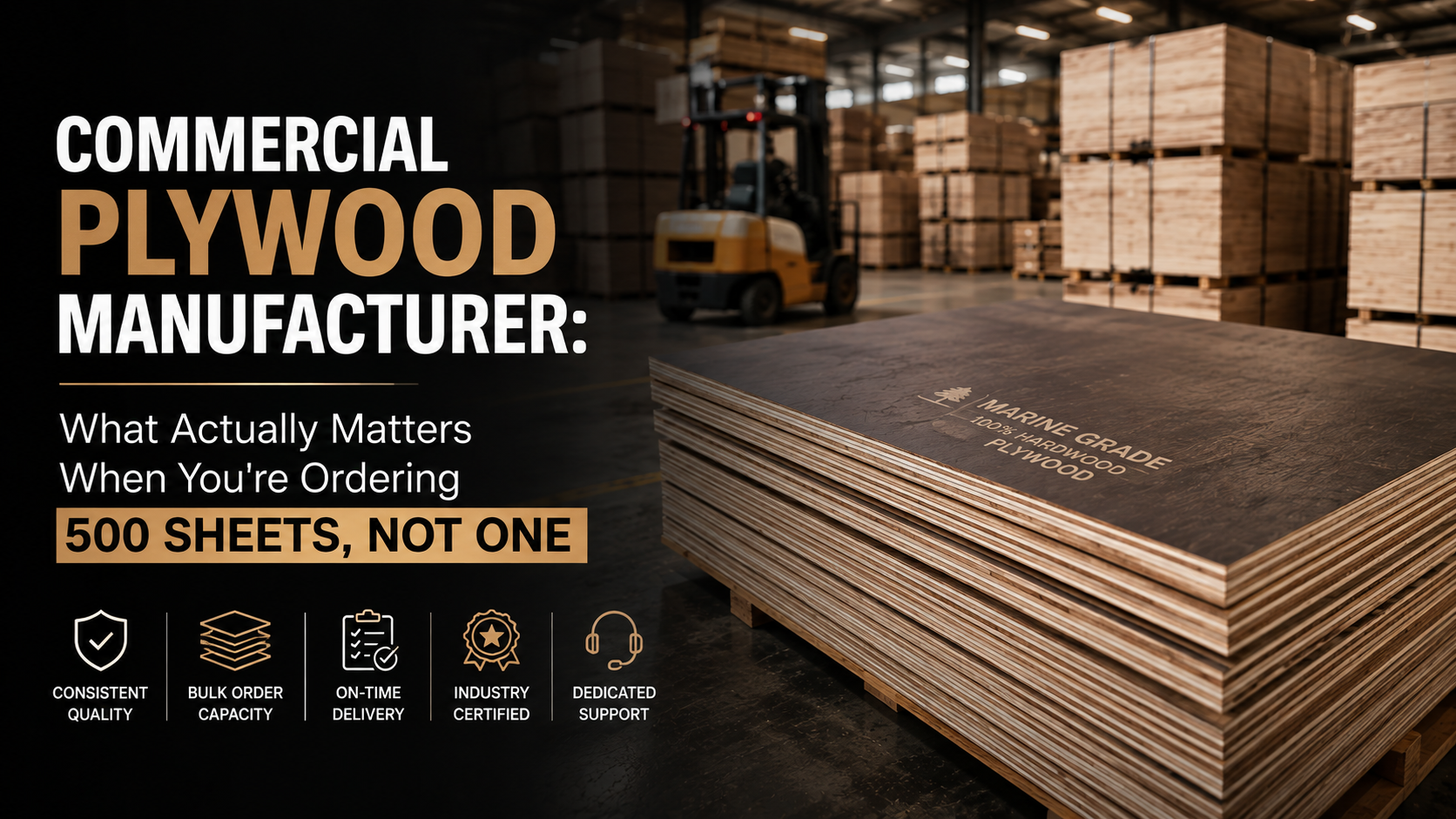
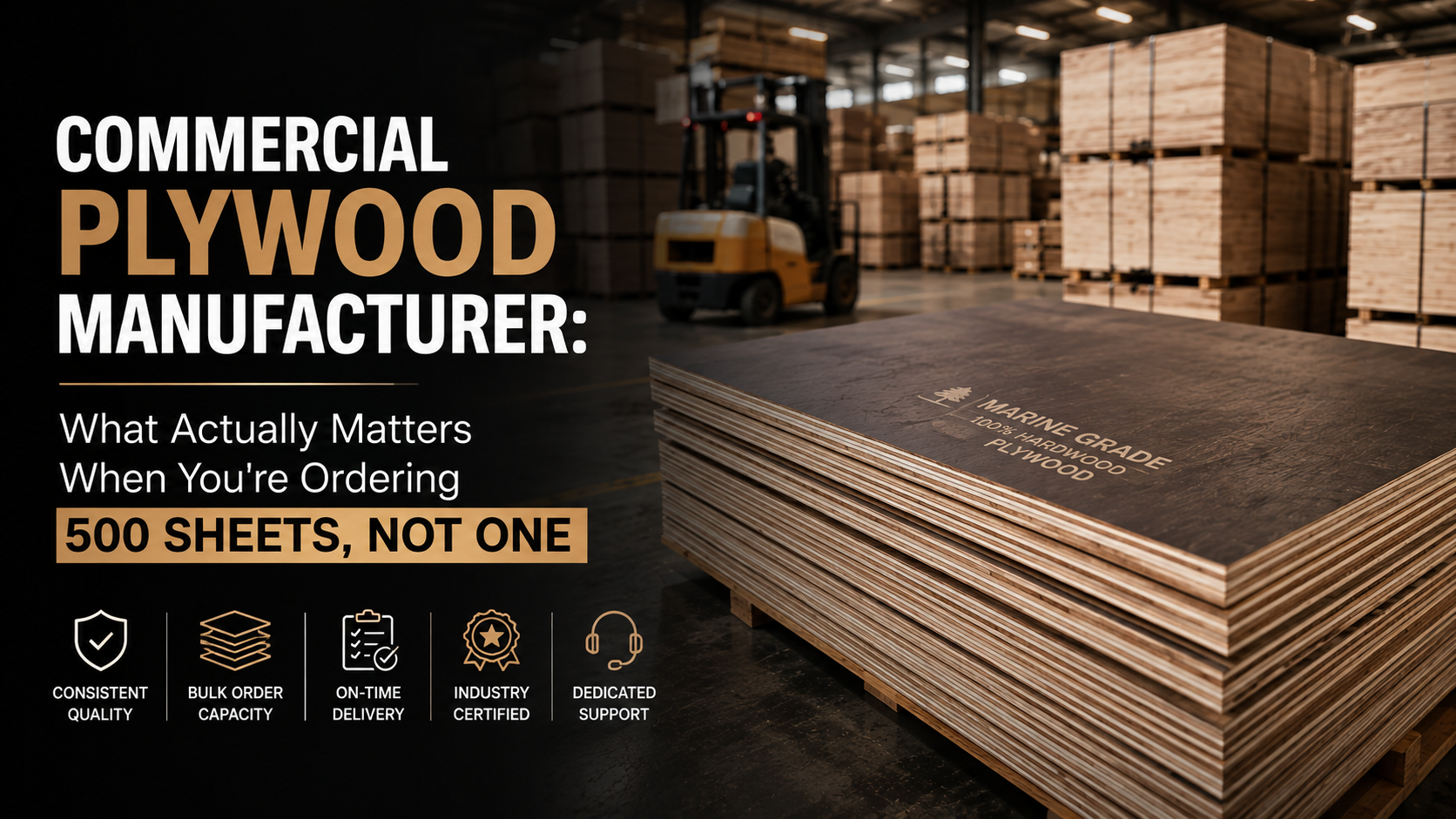
Commercial Plywood Manufacturer: What Actually Matters When You're Ordering 500 Sheets, Not One
Most commercial plywood manufacturer content online is a listicle ten brand names, a paragraph each, done. That's fine if you're comparing well-known names for a single home renovation. It's not much help if you're actually sourcing plywood for a project an office fit-out, a retail rollout, a residential development where the real question isn't which brand is good, it's will sheet 500 perform exactly like sheet 1.
We're Bhutan Tuff, a Delhi-based, BIS-certified plywood manufacturer trusted by over 2,000 clients including Airtel, ITC, DMRC, and NTPC. This is what actually matters when you're sourcing plywood at project scale, not buying a single sheet for a bookshelf.
The problem bulk buyers face that homeowners never do: consistency across the batch
A single sheet of plywood can look excellent in a showroom. The real test of a commercial plywood manufacturer isn't the sample sheet — it's whether sheet number 500 in a large order matches sheet number 1 in thickness, moisture resistance, and finish. Inconsistency across a batch is the single biggest complaint that comes from bulk sourcing, and it's invisible until installation is well underway.
A contractor fitting out a chain of retail stores across multiple cities needs the same plywood grade and finish to behave identically at every site — different batches with even slightly different core density or moisture content can mean cabinetry that fits perfectly in one store and needs on-site adjustment in another. That kind of inconsistency doesn't show up in a spec sheet; it shows up as unplanned labour cost during installation.
This is why continuous, standardised manufacturing processes matter more for commercial buyers than for a homeowner buying a handful of sheets. A manufacturer with proper batch tracking and quality control at scale can tell you a sheet's production date and batch number. One relying on manual, inconsistent processes usually can't.
Manufacturer or trader — the distinction that actually matters
A large share of the Indian plywood market runs through traders and dealers who buy from multiple small mills, relabel stock, and sell it as a single "brand." This isn't inherently dishonest, but it does mean the person you're buying from often has no real control over manufacturing consistency, because they didn't make what they're selling.
A genuine manufacturer controls the process end to end — timber sourcing, pressing, resin quality, and finishing — which is what actually makes batch-to-batch consistency possible. Before committing to a bulk order, it's worth asking directly whether you're buying from the manufacturer or a reseller, and if it's the latter, asking who actually produces the plywood and what quality control they follow. A supplier who can't answer this clearly, or gets vague about it, is a signal worth taking seriously on a large order.
Certifications that actually matter for commercial and institutional projects
Certifications get listed on every plywood website, but not all of them carry equal weight depending on your project type.
BIS certification (ISI mark) confirms the plywood meets the relevant Indian Standard — IS 303 for MR grade, IS 710 for marine/BWP. For any institutional or government-linked project, this isn't optional; procurement often requires it explicitly.
E-1 / Low Formaldehyde Emission certification matters more than most buyers realise for enclosed commercial spaces — offices, retail interiors, schools — where indoor air quality is a genuine occupational consideration, not just a marketing point. High-formaldehyde plywood in a poorly ventilated commercial space is a real, if often overlooked, workplace air quality issue.
IGBC alignment matters specifically for green building or LEED-rated commercial developments, where material sourcing and emission standards are part of the project's certification requirements, not just a nice-to-have.
Checking which of these actually apply to your project — rather than treating all certifications as interchangeable marketing badges — is worth the five minutes it takes.
Real scenarios where this plays out
An office fit-out contractor in Gurugram working on a multi-floor corporate interior needed plywood that met E-1 emission standards specifically because the client's HR and facilities team had flagged indoor air quality as a condition of sign-off — not an unusual requirement for large corporate tenants increasingly conscious of workplace health standards. Sourcing from a manufacturer who could provide clear certification documentation avoided a late-stage compliance scramble.
A residential developer ordering plywood across dozens of units for wardrobes and kitchen cabinetry needed absolute consistency in thickness and finish, since even small variations multiplied across dozens of identical units create a visible pattern of quality differences between flats — something that shows up in buyer complaints long after handover, when it's expensive to fix.
A government-linked infrastructure project required BIS-certified plywood with full batch documentation as a non-negotiable procurement condition — the kind of requirement that immediately rules out suppliers who can't clearly demonstrate they're the actual manufacturer, not a reseller repackaging third-party stock.
What to actually check before placing a large order
Ask for batch consistency documentation, not just a sample sheet. A sample proves what's possible, not what you'll receive across a full order.
Confirm manufacturer status directly. Ask where the plywood is actually produced and whether the seller controls that process, or is reselling from multiple sources.
Match certifications to your project's actual requirements. A residential wardrobe project and a government infrastructure tender need different certification priorities — don't pay for or overlook the wrong ones.
Ask about production capacity and lead times upfront. A manufacturer who can't clearly commit to a delivery timeline for a large order is telling you something about their actual production scale, regardless of what their website claims.
Check the track record on projects your size, not just total years in business. A manufacturer with genuine experience supplying large institutional or commercial clients has already solved the consistency and logistics problems a small workshop hasn't had to face yet.
What Bhutan Tuff offers commercial and bulk buyers
We manufacture our own plywood, veneers, and WPC boards under strict, BIS-certified quality control — not resell third-party stock — which is what makes batch-to-batch consistency possible at project scale. Our products are E-1 (Low Formaldehyde Emission) certified and OHSAS 18001 compliant, relevant for commercial interiors where indoor air quality matters, and we're trusted by over 2,000 clients including Airtel, ITC, DMRC, and NTPC — organisations with procurement standards that don't tolerate inconsistency across a large order.
The short version
Sourcing plywood for a project is a different problem to buying a single sheet, and the factors that matter change accordingly — batch consistency, manufacturer versus trader status, and certifications that actually apply to your project type, not just a badge on a website. A sample sheet tells you what's possible. Documentation, a clear production process, and a track record with buyers your size tell you what you'll actually receive.
Sourcing commercial plywood for a project? Get in touch with Bhutan Tuff to discuss bulk order requirements, certification documentation, and lead times.
FAQs
What's the difference between a plywood manufacturer and a plywood trader? A manufacturer controls the actual production process — timber sourcing, pressing, resin quality, finishing — while a trader typically buys stock from multiple smaller mills and sells it under a single brand name, with less direct control over consistency.
Why does batch consistency matter more for commercial projects than home use? A homeowner might buy a handful of sheets from one batch. A commercial project involving hundreds of sheets across multiple sites needs every sheet to perform identically, since even small variations in thickness or moisture resistance create visible, costly inconsistencies at scale.
Which plywood certifications matter most for office or commercial interiors? BIS certification confirms the plywood meets Indian Standards for its grade, while E-1 (Low Formaldehyde Emission) certification is particularly relevant for enclosed commercial spaces where indoor air quality is a consideration.
How do I verify a plywood supplier is an actual manufacturer? Ask directly where the plywood is produced, request batch documentation, and check whether the company can demonstrate hands-on control over the manufacturing process rather than describing it vaguely.
Does IGBC certification matter for all commercial plywood purchases? It matters specifically for green building or LEED-rated developments where material sourcing and emissions are part of formal project certification requirements. For projects without that certification track, it's a bonus rather than a necessity.