




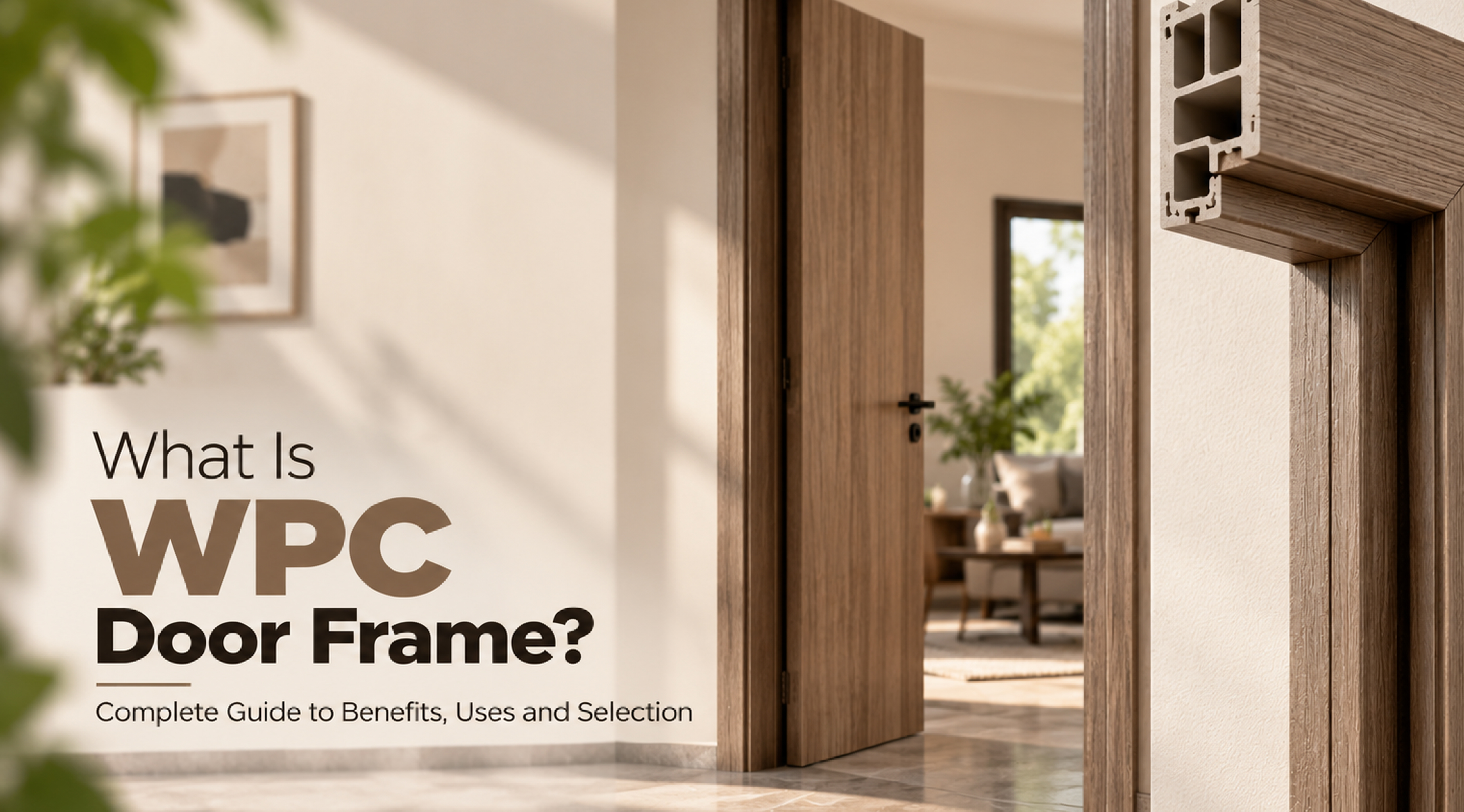
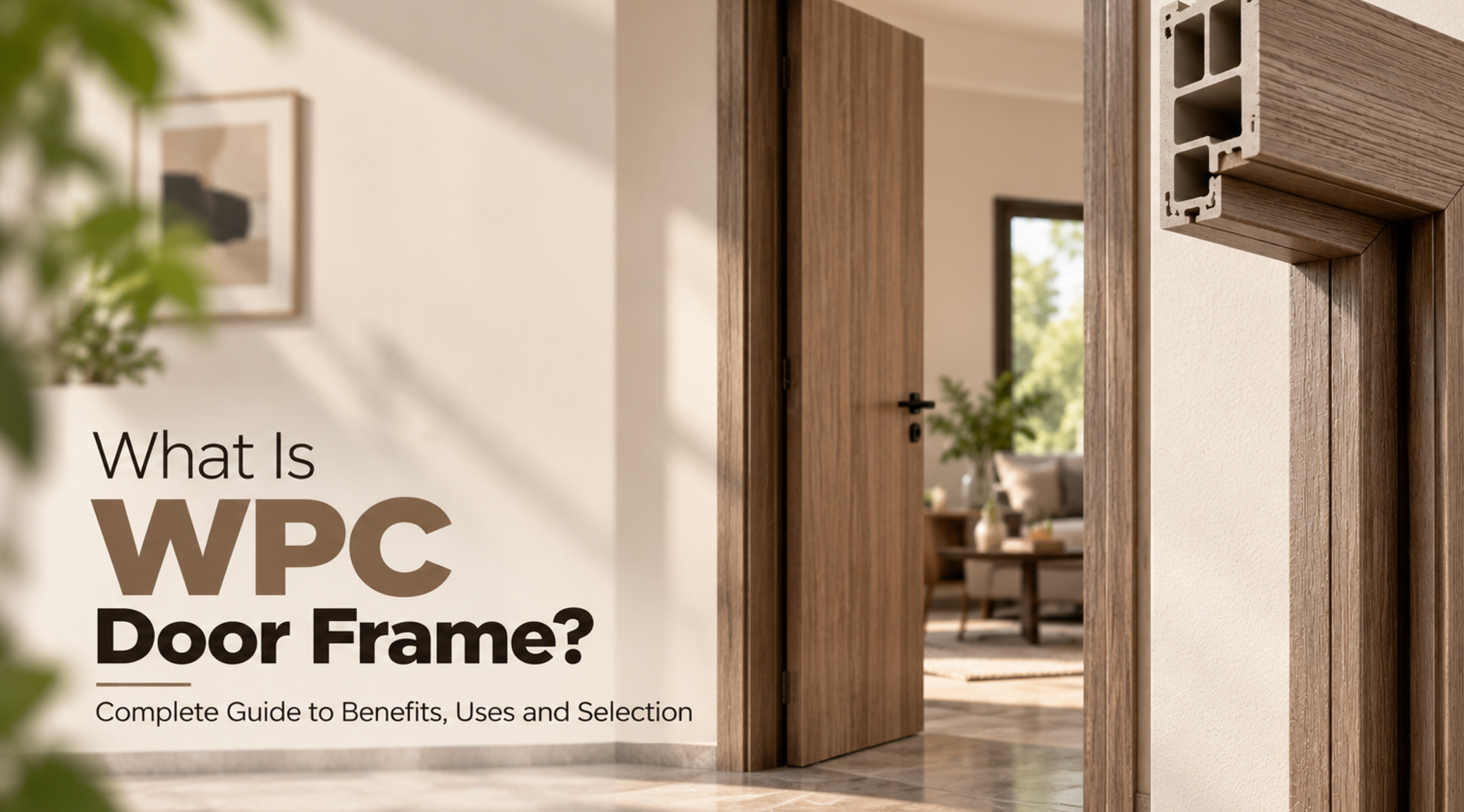
What Is a WPC Door Frame
When choosing a door for a new home, most people spend time comparing the shutter design, colour and finish. The door frame, however, is just as important.
The frame supports the door, holds the hinges and helps the shutter open and close correctly. If the frame is affected by moisture, termites or dimensional changes, even a good-quality door can eventually develop problems.
This is where WPC door frames have become an increasingly popular alternative to conventional wooden frames.
But what is WPC door frame, exactly? How is it different from wood, where should you use it, and is it really suitable for Indian homes?
Let's break it down in simple terms.
What Is a WPC Door Frame?
WPC stands for Wood Plastic Composite. A WPC door frame is an engineered door-frame material made by combining wood-based material with thermoplastic polymers.
Instead of being a natural piece of timber, it is manufactured as a composite material designed to provide properties such as moisture resistance, dimensional stability and resistance to termites and insects.
The result is a door frame that can provide a wood-like appearance while addressing some of the common problems associated with conventional wooden frames.
WPC door frames can be used for both interior and exterior applications, depending on the product specification and installation conditions. Bhutan Tuff's existing information similarly positions WPC frames for interior and exterior use and highlights their resistance to moisture, termites and demanding environmental conditions.
How Is a WPC Door Frame Made?
The exact formulation can vary between manufacturers.
Generally, WPC is produced by combining wood-based fibres or particles with a thermoplastic polymer and processing the mixture into a controlled profile.
This manufacturing process gives the material a more consistent structure than natural wood.
That consistency can be useful during door-frame installation because natural timber can vary in grain, density and moisture content.
The important point is that WPC is engineered for a specific performance, rather than simply being a piece of natural wood cut into a frame.
Why Are WPC Door Frames Becoming Popular?
The biggest reason is practical.
Indian homes can expose door frames to very different conditions. A bathroom may have high humidity. A kitchen can experience water splashes and steam. A ground-floor home may deal with dampness, while coastal locations can have persistently humid conditions.
Traditional wood can perform well when properly selected, seasoned, treated and maintained. But moisture and termites can create problems if the frame is not adequately protected.
WPC is attractive because it is designed to reduce exposure to some of these common problems.
For example, imagine a bathroom door frame positioned close to the floor. Every day it encounters humidity, occasional splashes and wet cleaning. A material designed for moisture-prone environments can be a more practical choice than selecting a frame purely for appearance.
Benefits of a WPC Door Frame
1. High Moisture Resistance
One of the biggest advantages of WPC is its resistance to moisture.
Unlike conventional untreated wood, WPC does not behave like a natural timber product that readily absorbs water and changes dimensions.
This makes WPC particularly useful for bathrooms, kitchens, utility areas and humid environments.
However, it is important to understand the difference between water-resistant material and a completely waterproof installation.
The frame is only one part of the finished doorway. Wall dampness, joints, installation quality and continuous water leakage can still affect the surrounding construction.
2. Termite and Insect Resistance
Termites are a major concern for wooden construction materials.
Because WPC is a wood-polymer composite rather than conventional solid timber, it is not an attractive food source for termites in the same way natural wood can be.
This makes termite resistance one of the major reasons homeowners consider WPC door frames.
It can be particularly useful in areas where termite activity is a recurring concern.
3. Low Maintenance
Wooden frames may require polishing, painting, protective treatment or repairs depending on the material and environment.
WPC generally requires less routine maintenance.
For a homeowner, this can make a practical difference over the years.
Instead of regularly worrying about polishing or treating the frame, the focus can remain on basic cleaning and checking the surrounding installation.
4. Good Dimensional Stability
Natural wood can respond to changes in moisture and temperature.
WPC is an engineered material designed to provide greater dimensional stability.
That can help maintain the shape and alignment of the frame under changing environmental conditions.
For a door, this matters because even relatively small dimensional changes can affect opening, closing and gaps around the shutter.
5. Suitable for Different Applications
WPC door frames are not limited to one room.
Depending on the product specification, they can be used in:
- Bedrooms
- Bathrooms
- Kitchens
- Utility areas
- Offices
- Hotels
- Commercial spaces
- Other moisture-prone interiors
Bhutan Tuff's existing WPC information also highlights applications for both interior and exterior doors.
Where Should You Use a WPC Door Frame?
The best application is usually one where the material's resistance to moisture and insects provides a practical advantage.
Bathroom
Bathrooms are one of the clearest examples.
Humidity, water splashes and floor cleaning can expose the lower part of a door frame to moisture repeatedly.
A WPC frame can therefore be a sensible option for bathroom doors.
Kitchen
Kitchen entrances can experience steam, humidity and occasional water exposure.
For example, a frame near a sink or utility passage may face considerably more moisture than a bedroom doorway.
Utility Area
Laundry and utility spaces often combine water connections, humidity and frequent cleaning.
Using a moisture-resistant frame in these locations can reduce concerns associated with conventional wood.
Humid or Coastal Locations
Homes in areas with high humidity can place additional demands on wood-based construction materials.
In such environments, homeowners may consider WPC specifically because moisture resistance is one of its key advantages.
WPC Door Frame vs Wooden Door Frame
The question is not simply whether WPC is "better" than wood.
Both materials have different characteristics.
Traditional wood is valued for its natural appearance, established craftsmanship and ability to be shaped and finished in many ways.
WPC is an engineered alternative focused on consistent performance, moisture resistance, termite resistance and lower maintenance.
For example, a homeowner building a traditional interior in a dry environment may prefer the natural character of premium timber.
Another homeowner installing a bathroom door in a humid area may prioritise moisture resistance and choose WPC.
The right decision depends on the application rather than a blanket rule.
WPC vs LVL Door Frame
LVL, or Laminated Veneer Lumber, is another engineered wood product used in construction.
It is manufactured by bonding layers of wood veneer together to create a strong and dimensionally consistent material.
The important difference is that LVL remains a wood-based engineered material, whereas WPC combines wood-based material with thermoplastic polymers.
If your primary concern is structural wood performance, LVL can be an option worth considering.
If your priority is resistance to moisture and termites, WPC may offer advantages that make it more suitable for certain applications.
This is why the location of the door matters so much.
Your bathroom door and bedroom door do not necessarily need the same frame material.
Is a WPC Door Frame Really Waterproof?
You will often see WPC frames marketed as waterproof.
The material's resistance to water and moisture is one of its main advantages. However, it is better to look at the complete installation rather than assuming that any WPC frame makes the entire doorway waterproof.
Consider a bathroom.
Even if the frame itself handles moisture well, water can still enter through poorly sealed joints, wall interfaces or surrounding construction.
So when choosing WPC, pay attention to both material quality and installation quality.
A good product installed badly can still create problems.
What Should You Check Before Buying a WPC Door Frame?
Do not choose a frame only because it says "WPC" on the product label.
Check the following:
Material Quality
Ask the manufacturer what type of WPC formulation and construction the product uses.
Different manufacturers can produce materials with different densities, compositions and performance characteristics.
Size and Profile
The frame profile should match the wall thickness, door opening and shutter requirements.
Incorrect dimensions can create installation and alignment problems.
Density and Strength
For doors carrying hinges and hardware, adequate strength and screw-holding performance matter.
Ask for product specifications rather than relying only on general marketing claims.
Moisture and Termite Protection
If you are specifically buying WPC for a bathroom, kitchen or humid area, confirm the manufacturer's stated performance for those conditions.
Finish Options
WPC frames can be available in different colours, profiles and finishes.
Choose a finish that works with the door shutter and surrounding interior rather than treating the frame as an isolated element.
Warranty
A clear warranty gives you useful information about the manufacturer's confidence in the product.
It is worth checking what the warranty covers and under what installation conditions.
A Simple Real-Life Example
Imagine two identical homes being built in the same city.
In Home A, the bathroom uses a conventional wooden frame. The bathroom has poor ventilation and the floor is frequently washed. Over time, the lower section of the frame starts showing signs of moisture exposure.
In Home B, the bathroom uses a suitable WPC door frame. The frame still needs correct installation and the surrounding area still needs proper maintenance, but the material itself is better suited to the moisture-heavy environment.
The difference is not about making one home look more luxurious than the other.
It is about selecting the material according to the conditions it has to handle.
Why Choose Bhutan Tuff WPC Door Frames?
Bhutan Tuff offers WPC door frames as part of its wider range of wood and construction solutions.
The company's existing WPC information highlights features including high moisture resistance, termite resistance, strength, machinability and suitability for interior and exterior applications. It also notes that different colours and sizes are available.
For a homeowner or contractor, the more important point is that WPC should be selected according to the project's actual requirements.
If you are building a bathroom, kitchen, utility space or another area where moisture is a concern, ask your contractor to compare WPC with the other frame materials being considered.
Look at the material specifications, profile, dimensions, installation method and warranty—not just the initial price.
Frequently Asked Questions About WPC Door Frames
What is a WPC door frame?
A WPC door frame is an engineered frame made from Wood Plastic Composite, combining wood-based material with thermoplastic polymers. It is designed to offer properties such as moisture resistance, termite resistance and dimensional stability.
Is WPC better than wood for door frames?
It depends on the application. WPC can be particularly advantageous where moisture, termites and low maintenance are priorities, while natural wood may be preferred where its appearance and traditional characteristics are important.
Can WPC door frames be used in bathrooms?
Yes. Moisture resistance is one of the main reasons WPC frames are considered for bathrooms and other humid areas.
Are WPC door frames termite-proof?
WPC is generally resistant to termite and insect attack because its composite composition does not behave like conventional natural timber. Always check the specific manufacturer's performance claims and warranty.
Do WPC door frames need polishing?
Generally, WPC requires less maintenance than conventional wooden frames and does not require the same type of regular polishing. However, maintenance requirements depend on the product's finish and installation.
Can WPC door frames be used outdoors?
Some WPC door-frame products are designed for exterior applications, but suitability depends on the manufacturer's specifications, UV exposure, weather conditions and installation method.
How long does a WPC door frame last?
There is no single lifespan that applies to every WPC frame. Product formulation, quality, installation and environmental exposure all affect service life. Always check the manufacturer's tested performance and warranty rather than relying on a generic number.
Final Thoughts
So, what is WPC door frame?
It is an engineered door-frame material made from Wood Plastic Composite, designed to combine wood-based characteristics with the performance advantages of thermoplastic materials.
Its main appeal is straightforward: moisture resistance, termite resistance, dimensional stability, strength and relatively low maintenance.
That makes it particularly useful for bathrooms, kitchens, utility areas and other environments where conventional wood may require more protection and maintenance.
But the best door-frame material is always the one that matches the conditions of your project.
Before buying, compare the material quality, profile, dimensions, strength, moisture performance, finish, installation requirements and warranty.
And if you are looking for a WPC solution for your next project, Bhutan Tuff provides WPC door-frame options designed for modern residential and commercial applications.
The smartest choice is not simply the material that looks good on day one. It is the material that continues to perform well after years of everyday use.