




Best Plywood for Wardrobe
Search best plywood for wardrobe and every single result ours included tells you the same thing: MR grade for dry bedrooms, BWR for moderate humidity, BWP or marine grade for bathrooms and coastal homes. That advice isn't wrong. But it also isn't why most wardrobes actually fail. Talk to any carpenter who's fixed a sagging wardrobe shelf or a door hinge that's worked loose within two years, and moisture almost never comes up. What comes up is the core.
We're Bhutan Tuff, and here's the part the grade chart genuinely doesn't cover.
Grade Tells You About the Glue. It Doesn't Tell You About the Wood.
MR, BWR, and BWP are certifications under IS 303 and IS 710 and what they actually certify is how the adhesive bond between veneer layers holds up under moisture and heat. That's a real, important test. But it says nothing about the density of the wood core itself, how many internal voids or gaps sit between the veneer layers, or what species of wood was used to build that core.
This matters because two sheets can both be genuinely, legitimately certified BWR grade both pass the same boiling water adhesion test and still behave completely differently once they're holding up your wardrobe's weight and hardware for years. One holds a hinge screw firmly for a decade. The other has that same screw working loose within 18 months, not because the glue failed, but because the core underneath the screw was low-density or had a gap right where the screw needed to bite.
The Actual Most Common Wardrobe Complaint Isn't Moisture Damage
If you ask a carpenter what goes wrong with wardrobe plywood over time, the answer is usually one of these: a sagging shelf that's bowed under sustained weight, a door hinge that's gone loose and won't hold its screw anymore, or a wobbly carcass where panels don't sit flush against each other. All three trace back to core density and consistency not moisture resistance, which is what grade certifications are actually testing for.
A hinge screw needs solid, dense wood fiber to grip into. If it lands in a core with soft filler wood, a knot, or a void gap between veneer layers, the screw simply doesn't have enough material to hold onto under repeated door-opening stress and that failure shows up as a loose, wobbly door within a year or two, regardless of what grade certificate the sheet came with.
Core Species: The Detail Almost Nobody Explains
Plywood cores are typically built from either hardwood species (like gurjan) or softer, faster-growing species (like poplar or eucalyptus), sometimes blended within the same sheet. Hardwood cores are denser and hold screws and hinges far more reliably over years of daily wardrobe use opening and closing doors, sliding drawers, mounting hanging rods. Softer core species are lighter and cheaper, which is exactly why they show up in budget plywood, but they're also where screw pull-out and sagging shelves originate over time.
The problem is that core species almost never appears on a grade sticker or in generic buying guides grade tells you about moisture resistance, not what's actually holding your wardrobe's hardware in place. This is worth asking your dealer or manufacturer directly, not assuming it's covered by BWR or 710 grade alone.
What Calibrated Actually Solves (And Why It Matters for a Carcass)
A wardrobe carcass is built from multiple plywood panels that need to sit flush against each other sides, top, bottom, shelves, back panel. If sheet thickness varies even slightly across a batch (18.2mm in one sheet, 17.6mm in another, both sold as 18mm), those small inconsistencies compound across a multi-panel structure, showing up as visible gaps, uneven joints, or a carcass that never quite sits square no matter how carefully it's assembled.
Calibrated plywood is sanded to a precise, consistent thickness across the entire batch specifically to avoid this. For a single door or shelf, thickness variance barely matters. For a full wardrobe carcass built from a dozen or more panels that all need to align, it's the difference between a tight, professional fit and a structure that looks slightly off no matter how good the carpentry is.
A Practical Check You Can Actually Do at the Dealer
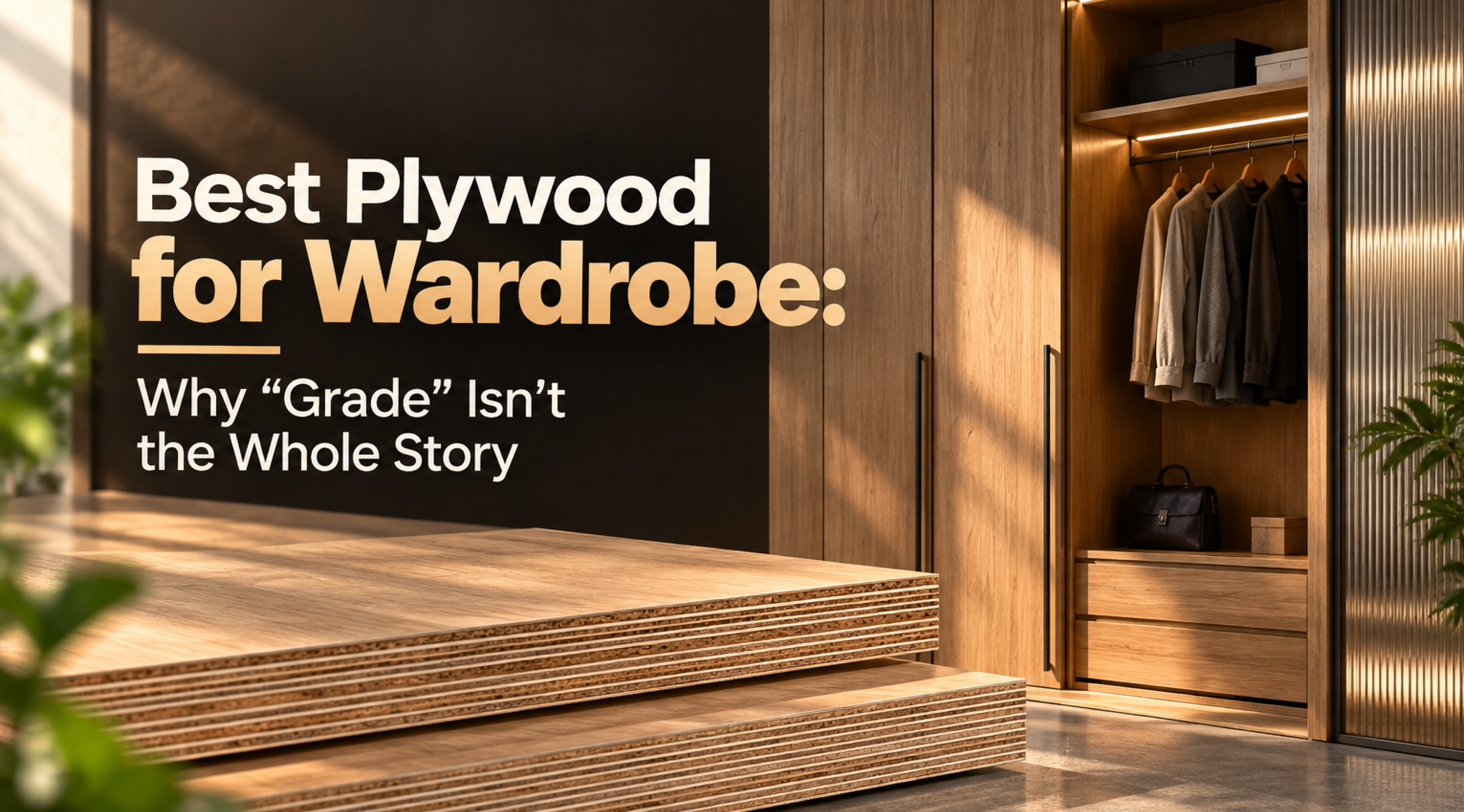
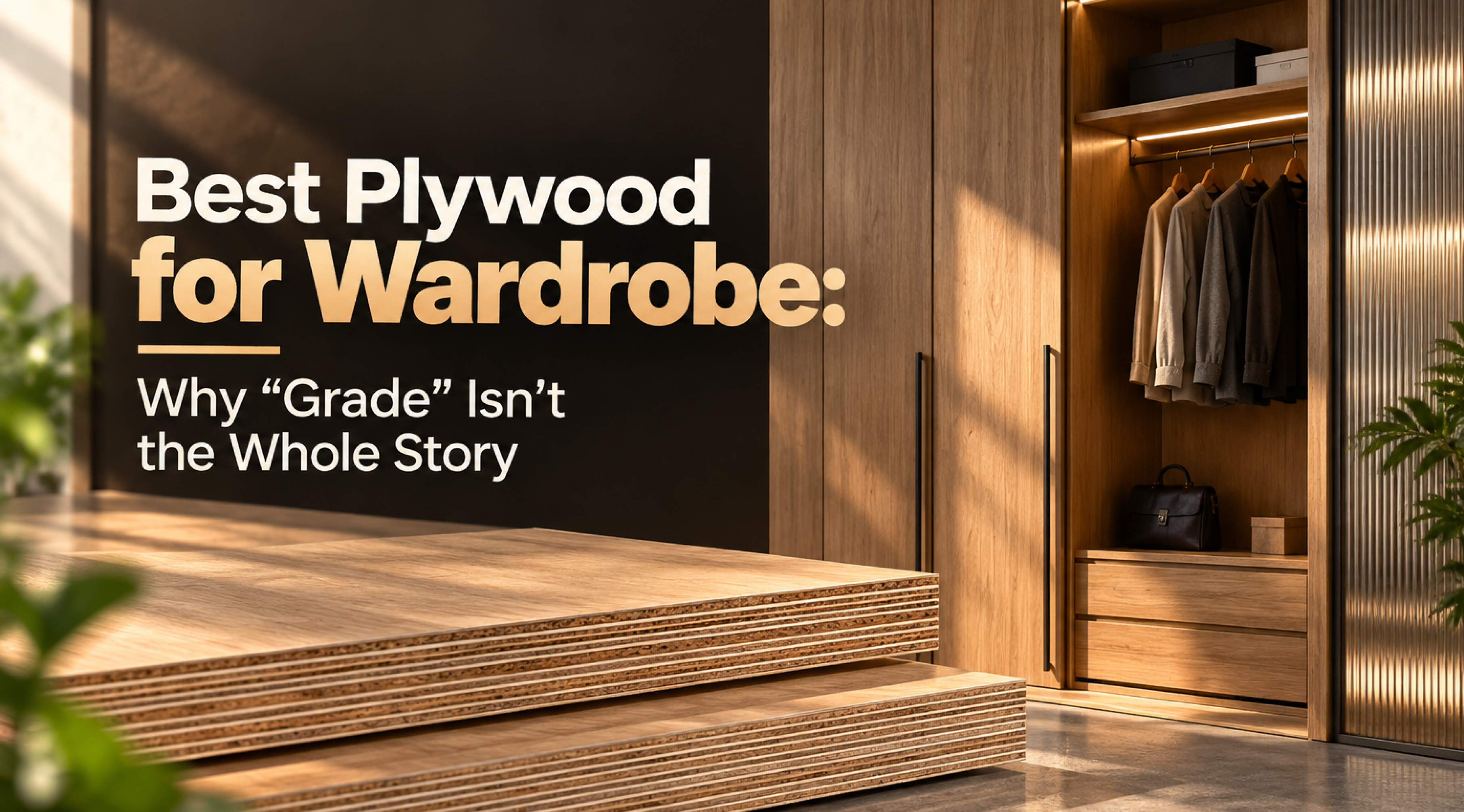
Before you commit to a batch, look at the exposed edge of a cut sheet, not just the flat face. A dense, void-free core shows tightly packed, uniform layers straight through the cross-section. A lower-quality core often shows visible gaps, inconsistent layer thickness, or patches of noticeably lighter, softer-looking wood mixed into the cross-section. This five-second check tells you more about long-term hinge and screw performance than the grade sticker does.
It's also worth simply picking up two sheets of the same size and grade side by side a genuinely denser hardwood-core sheet will feel noticeably heavier in hand than a lighter, softer-core equivalent, even at identical thickness.
Thickness, Briefly Since Grade and Core Aren't the Only Factors
For the record, since it does still matter: 18-19mm plywood is the standard for wardrobe carcass panels (sides, shelves, doors), while 6-8mm suits back panels that don't carry structural load. This part of the advice genuinely is consistent across the market for good reason it's just not the part that determines whether your hinges are still tight five years from now.
Frequently Asked Questions
Does a higher moisture-resistance grade (BWP vs MR) also mean a stronger core?
Not necessarily. Grade certifications test adhesive bond performance under moisture, not core density or wood species. A BWP-grade sheet can still have a lower-density core than an MR-grade sheet from a different core specification, though reputable manufacturers generally pair higher grades with solid core construction.
Why did my wardrobe hinge come loose even though I used BWR plywood?
This is usually a core density issue rather than a moisture or grade problem the screw likely landed in a lower-density area or a small void in the core, which doesn't hold a screw as reliably as a dense, hardwood-based core.
What core wood species should I look for in wardrobe plywood?
Hardwood-based cores (such as gurjan) offer better screw and hinge retention than softer, faster-growing species like poplar or eucalyptus. Ask your manufacturer or dealer specifically about core composition, since it's rarely stated as clearly as the grade certification.
Is calibrated plywood worth the extra cost for a wardrobe?
For a full wardrobe carcass built from multiple panels, yes consistent thickness across the batch avoids the gaps and uneven joints that come from panels that don't quite match each other, even when each individually meets the labelled thickness.